Short answer
This is a survey, not a designer's wish list: Houzz asked 1,738 U.S. homeowners who had renovated, were renovating or planned to renovate a bathroom in 2024-25 what they chose. The figures below are shares of those homeowners, from the 2025 U.S. Houzz Bathroom Trends Study, the most recent edition.
1. Tubs out, bigger showers in
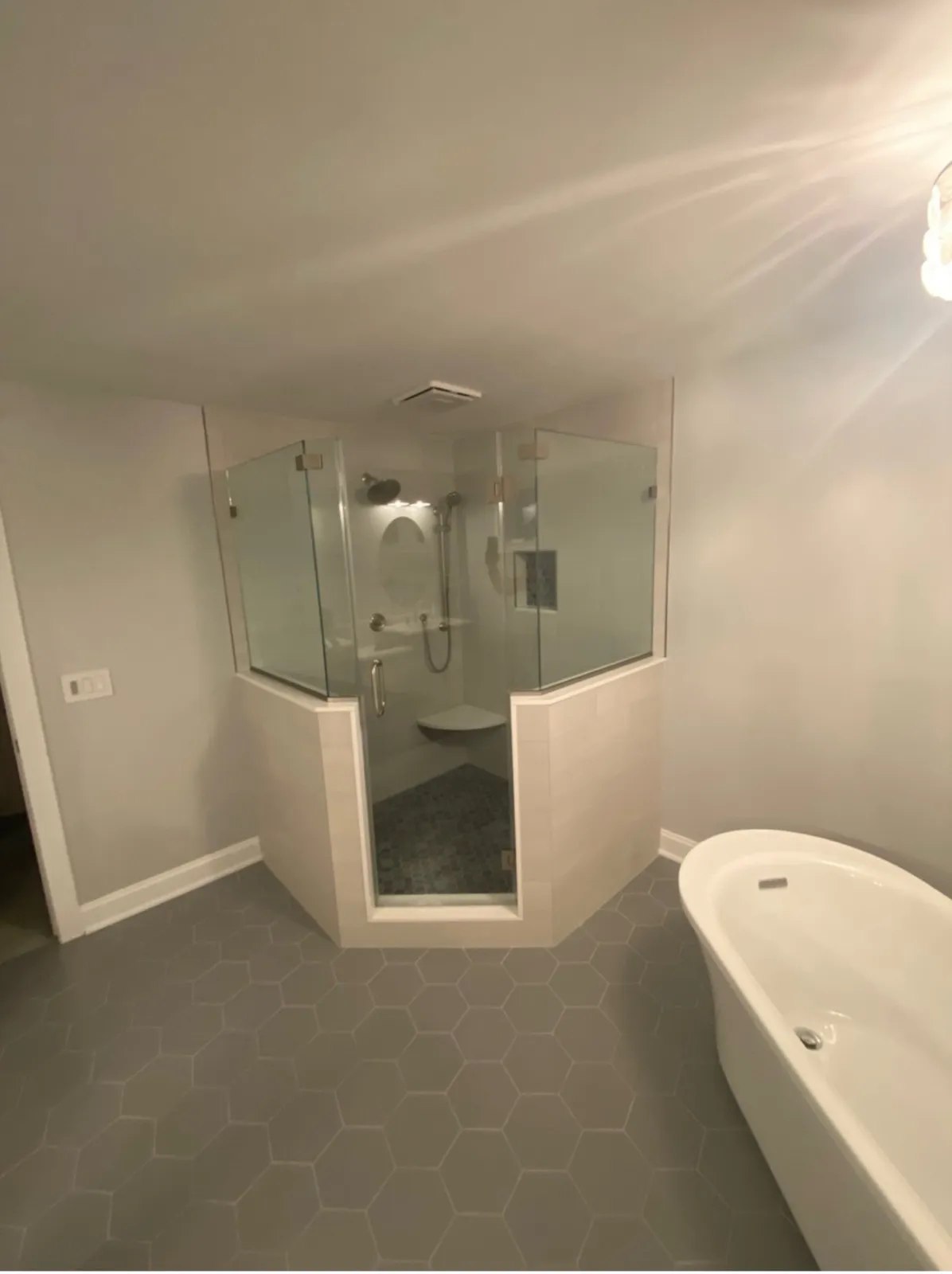
A quarter of renovating homeowners (25%) removed the bathtub altogether, while 26% kept their existing tub and 34% upgraded it. Of those who took a tub out, 82% used the space to make the shower bigger. Enlarging the shower was the second most common bathroom project overall (39%), and 18% of homeowners upgrading a shower made it more than 50% larger.
Thinking about it? Read the tub-to-shower conversion guide, and keep one tub somewhere in the house if you can.
2. Low curbs and frameless glass
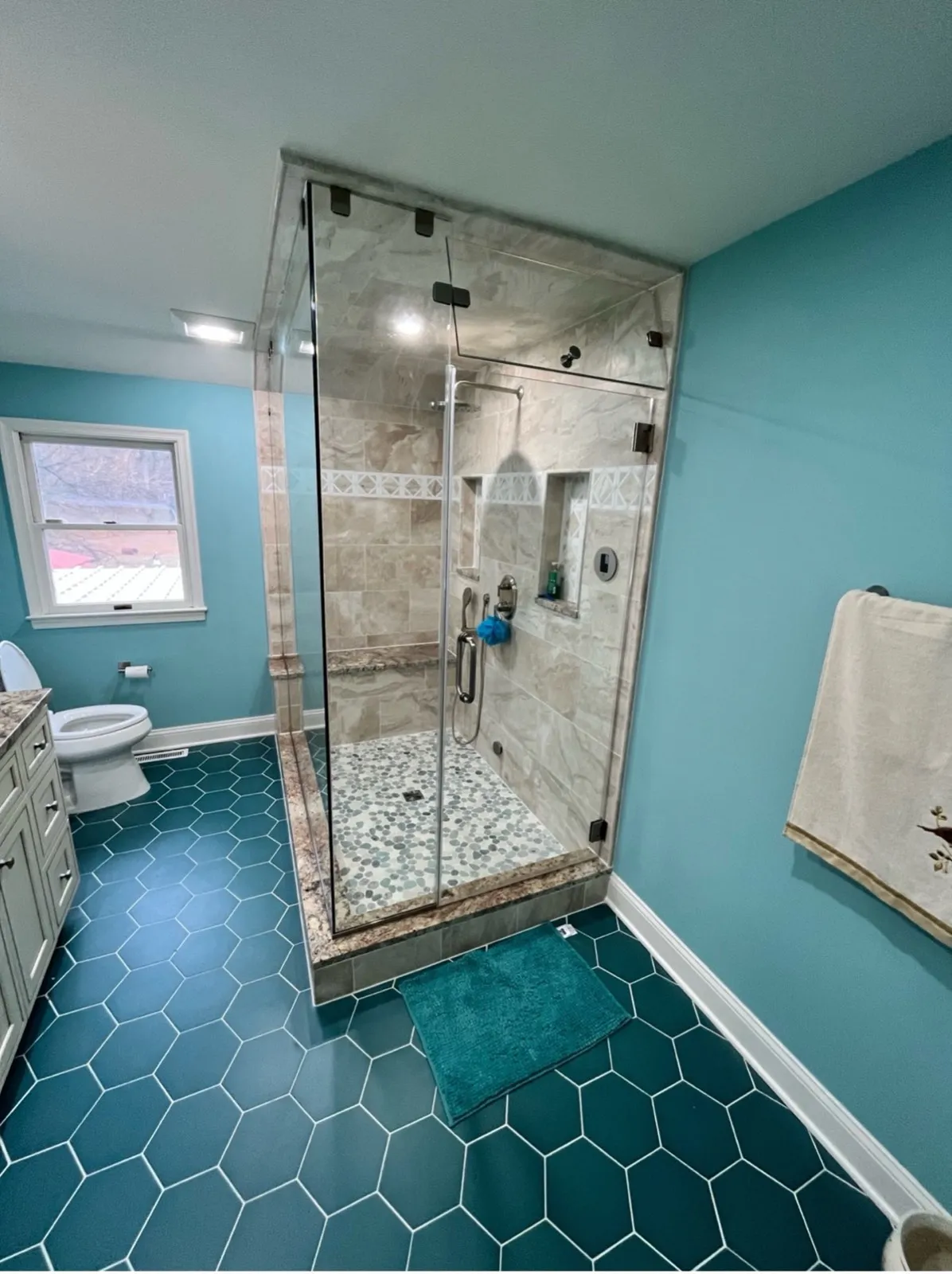
Among homeowners upgrading a shower, low-curb (44%) and alcove (42%) designs lead, with curbless at 20%. Most showers get a door (84%), and frameless glass is the clear favorite (75%), usually hinged (38%) rather than sliding (20%).
3. Wet rooms are growing
Wet rooms, where the shower and tub share one waterproofed zone, now account for 16% of renovated bathrooms, up 3 points. Half of the homeowners who chose one did it for better use of space. In a wet room, freestanding flat-bottom tubs are the top choice (57%).
4. Planning for getting older
68% of renovating homeowners addressed special needs, up 4 points, most often those of aging household members (41%). Nearly half (49%) planned for aging household members' future needs. The most common features among those addressing aging needs: grab bars (61%), nonslip flooring (55%), low-curb showers (52%), extra lighting (31%) and curbless showers (28%).
5. Wood vanities, white tops, quartz
Wood tones lead new vanity colors (28%), ahead of white (20%); green inched up to 5%. Countertops stay light: nearly half (48%) are white. Engineered quartz is the vanity countertop of choice (45%), followed by quartzite (20%), granite (14%) and marble (13%). Custom vanities remain most common (55% fully or semi-custom), mostly solid wood (74%), with maple (29%) and white oak (23%) leading and Shaker doors on nearly half (49%).
6. Tile underfoot, paint on the walls
Porcelain (39%) and ceramic (26%) lead floor materials inside and outside the shower. Small shower floor tiles (up to 4 by 4 inches) are still most common (61%), though down 4 points, and extra-large tile is up 2 points to 6%. Outside the shower, 29% chose nonslip flooring and 20% heated floors. Paint still covers most walls outside the shower (71%), with porcelain gaining (13%).
7. Ventilation and lighting
61% of homeowners upgraded systems during the remodel, and among them a new ventilation fan was the most common addition (58%). That lines up with the code: a New Jersey bathroom needs either windows with at least 3 square feet of glass, half of it openable, or light and an exhaust fan vented directly outdoors (IRC 2021 NJ Edition, R303.3; more in the bathroom remodel guide). For lighting, recessed fixtures still lead (40%), with sconces and ceiling lights at 34% each and lighted mirrors rising to 22%.
8. Quiet tech
38% of homeowners chose a toilet with special features, led by bidet seats (21%), adjustable bidet pressure (20%) and heated seats (19%). Among upgraded medicine cabinets, hidden outlets (22%) and antifog systems (17%) are the most common features.
What this means for your bathroom
The rising choices are practical ones: a bigger, easier shower, a floor that is not slippery, better light and air, and storage built for the room. They also tend to cost more in an older house, where moving a drain or cutting a curbless shower pan into the floor means opening the subfloor. See the bathroom remodel cost guide for what projects cost, then request a free estimate or call (856) 214-9156.
Sources
- Houzz Inc., 2025 U.S. Houzz Bathroom Trends Study (1,738 renovating homeowners, surveyed July 2025). Checked September 2026.
- International Code Council / N.J. Uniform Construction Code, International Residential Code 2021, New Jersey Edition: R303.3 bathroom ventilation, R305 ceiling height, R310 emergency escape and rescue openings. Checked September 2026.